



That's why we took decisive action to set up a TIC branch office at our Tokyo Office (Yaesu, Chou-ku, Tokyo). By establishing the Tokyo Lab as a technology development base conducting experiments, we could organize activities for technology research and collaborate with venture companies. These actions have paid huge dividends in terms of joint research with universities, collaboration with venture companies, and recruitment of new graduate and mid-career hires.
NEWS
At the Frontlines of Daikin’s Semiconductor Development: Establishment and Challenges of the DAIKIN- Tokyo Lab
FEATURE
2025.03.07
In recent years, Daikin Industries has been undertaking development of its own unique semiconductors at the Tokyo Lab under the Daikin Technology and Innovation Center (TIC). For this story, we meet with Aya Iwata, who was in charge of planning and promoting the establishment of the Tokyo Lab, along with Yuya Horinouchi and Akito Matsui, who are involved in semiconductor development, to learn the backstory and aims behind the opening of the Tokyo Lab. At the same time, we will ask about the development process, work motivation, and appeal of the facility from the perspective of the engineers who actually work at the lab.
In addition to discussing specific technical elements, such as the development of custom microcontrollers for inverters, the introduction of semiconductor evaluation methods, and collaborative creation efforts, we expect them to talk about the factors that led to their growth as semiconductor development engineers.
In addition to discussing specific technical elements, such as the development of custom microcontrollers for inverters, the introduction of semiconductor evaluation methods, and collaborative creation efforts, we expect them to talk about the factors that led to their growth as semiconductor development engineers.
Backstory and Structure of the Tokyo Lab
——Accelerating core technology development with expansion to Tokyo
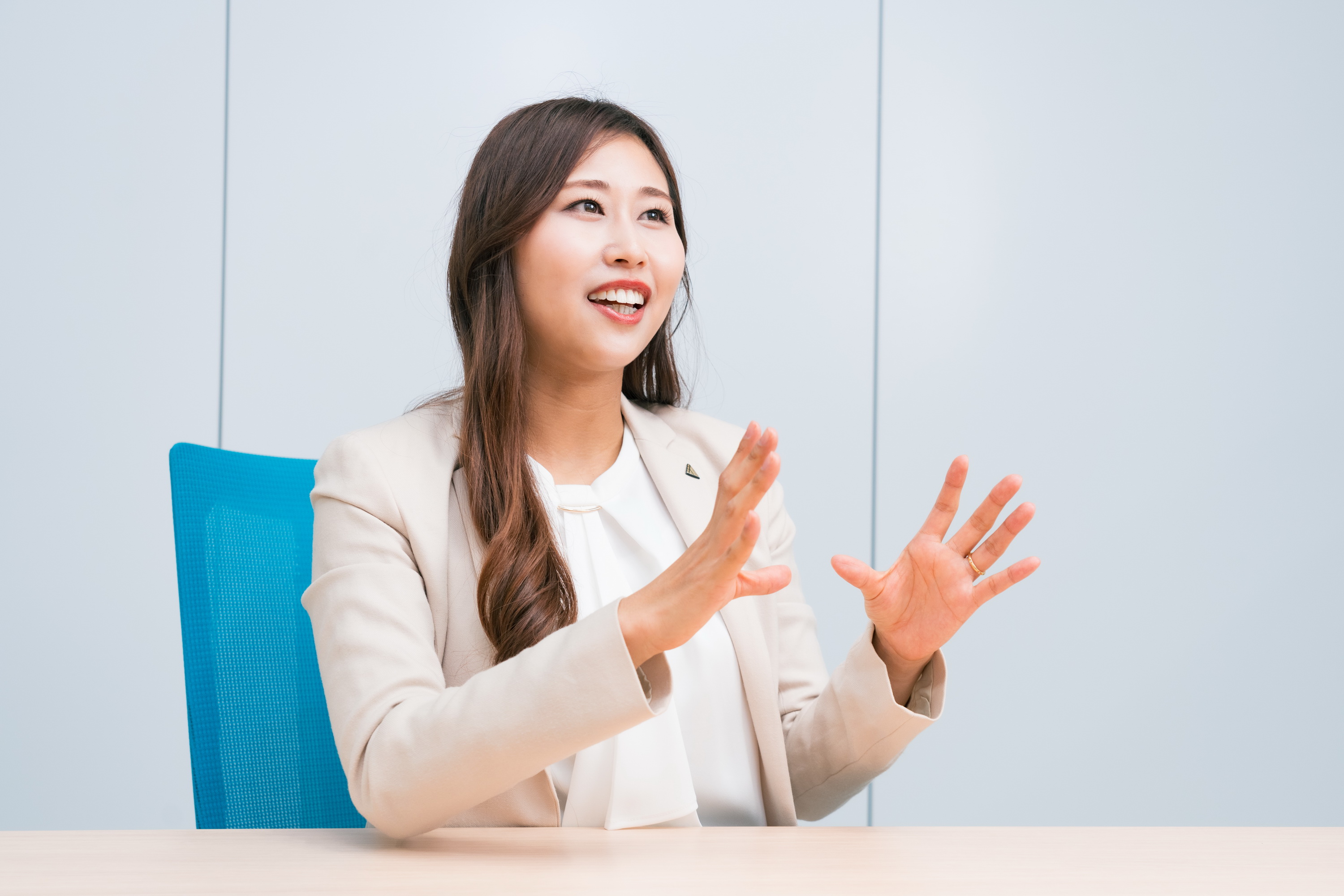
Iwata: With its strong image as a Kansai company, Daikin has found it difficult to proceed ahead with development themes for those customers, universities, and companies concentrated in the Kanto region, especially Tokyo, because of the distance between the two regions.
Iwata: With its strong image as a Kansai company, Daikin has found it difficult to proceed ahead with development themes for those customers, universities, and companies concentrated in the Kanto region, especially Tokyo, because of the distance between the two regions.
——The role of the Tokyo Lab in collaboration with the Osaka base
Iwata: At the Tokyo Lab, we focus on themes that would be more efficient to take up in the Kanto region and operate as a two-base system with responsibilities shared between the Tokyo Lab and the Osaka base. Leveraging the respective strengths of both, we are working to increase speed and optimize R&D. Currently, the Tokyo Lab has 16 members who are focusing on the two themes of "Motor & inverter technology research" and "microcontroller semiconductor development."
Even though we would like to increase the number of team members in "Motor & inverter technology research," we decided to keep the current structure from a perspective of balance with the development team in Osaka. In the future, we plan to install compressor testing equipment and have a compressor engineer stationed here.
——Supporting multiple uses from collaborative research to general exhibition areas
Iwata: The Tokyo Lab features multi-purpose spaces. For example, the "Co-Working Lab" is a place where not only Daikin employees can conduct experiments, but it is a place where university professors and students can also engage in joint research. Conversely, the "Project Room," is a place where highly confidential work is performed, such as microcontroller development, facilitating access to development-related companies to come in and perform various tests.
Additionally, two areas serve to introduce Daikin: the "Open Room" and the "Discussion Room." Anyone can freely enter and leave the "Open Room," which provides a place to present Daikin to a wide range of people who visit the rental lab, and the "Discussion Room," which provides a discussion forum using actual air conditioner components, while promoting the proposal of new collaborative creation themes.
Iwata: At the Tokyo Lab, we focus on themes that would be more efficient to take up in the Kanto region and operate as a two-base system with responsibilities shared between the Tokyo Lab and the Osaka base. Leveraging the respective strengths of both, we are working to increase speed and optimize R&D. Currently, the Tokyo Lab has 16 members who are focusing on the two themes of "Motor & inverter technology research" and "microcontroller semiconductor development."
Even though we would like to increase the number of team members in "Motor & inverter technology research," we decided to keep the current structure from a perspective of balance with the development team in Osaka. In the future, we plan to install compressor testing equipment and have a compressor engineer stationed here.
——Supporting multiple uses from collaborative research to general exhibition areas
Iwata: The Tokyo Lab features multi-purpose spaces. For example, the "Co-Working Lab" is a place where not only Daikin employees can conduct experiments, but it is a place where university professors and students can also engage in joint research. Conversely, the "Project Room," is a place where highly confidential work is performed, such as microcontroller development, facilitating access to development-related companies to come in and perform various tests.
Additionally, two areas serve to introduce Daikin: the "Open Room" and the "Discussion Room." Anyone can freely enter and leave the "Open Room," which provides a place to present Daikin to a wide range of people who visit the rental lab, and the "Discussion Room," which provides a discussion forum using actual air conditioner components, while promoting the proposal of new collaborative creation themes.
 Design of Tokyo Lab's multi-purpose area
Initiatives for Daikin Semiconductor Development
——Developing custom semiconductors for differentiating air conditioners
Matsui: Daikin's greatest strength is its ability to proceed ahead with semiconductor development while managing all other elements on an air conditioner. To attain high efficiency in an air conditioner, it is essential to "have a unique control method on a semiconductor." With our unique expertise, especially in motor control, we believe that implementing this on a semiconductor is key to differentiating ourselves from other companies.
 Semiconductors developed at the TIC Tokyo Lab for inverters and major components
——Collaboration with a semiconductor manufacturer is essential
Matsui: For Daikin, full-scale semiconductor development was a new undertaking that began from 2020. Initially we started with the approach of trying to understand "what exactly semiconductor development was," and learned the process for creating new semiconductors in partnership with a semiconductor manufacturer. In the process, we realized that "we first needed to learn more about semiconductors themselves," and so we continued to gather information.
Currently, our engineers are mastering semiconductor design and digital circuit technology, and their mindset has changed to one of "working together with manufacturers to create new semiconductors."
Matsui: For Daikin, full-scale semiconductor development was a new undertaking that began from 2020. Initially we started with the approach of trying to understand "what exactly semiconductor development was," and learned the process for creating new semiconductors in partnership with a semiconductor manufacturer. In the process, we realized that "we first needed to learn more about semiconductors themselves," and so we continued to gather information.
Currently, our engineers are mastering semiconductor design and digital circuit technology, and their mindset has changed to one of "working together with manufacturers to create new semiconductors."
——Desire to "manufacture the necessary semiconductors ourselves" prompted move to Tokyo
Matsui: The reason for starting development of custom semiconductors originated in the difficulty to procure general-purpose products because of the COVID-19 pandemic. While procurement difficulties had been the direct reason for starting development, we now have a strong desire to "develop the necessary semiconductors ourselves" to propel further differentiation of our air conditioners and establish technological capabilities.
Actually, before 2020, we had hardly any experience in developing custom microcontrollers. However, we did have experience working on several custom power semiconductor products. In recent years, the amount of software installed in air conditioners has increased, making it difficult to control them using conventional microcontrollers, so we have begun to fully develop custom microcontrollers.
Matsui: The reason for starting development of custom semiconductors originated in the difficulty to procure general-purpose products because of the COVID-19 pandemic. While procurement difficulties had been the direct reason for starting development, we now have a strong desire to "develop the necessary semiconductors ourselves" to propel further differentiation of our air conditioners and establish technological capabilities.
Actually, before 2020, we had hardly any experience in developing custom microcontrollers. However, we did have experience working on several custom power semiconductor products. In recent years, the amount of software installed in air conditioners has increased, making it difficult to control them using conventional microcontrollers, so we have begun to fully develop custom microcontrollers.
Digital Technologies Required at Development Sites and Collaboration with Other Companies
——Leveraging DICT experience in digital circuit design
——Proactive technical proposals to semiconductor manufacturers
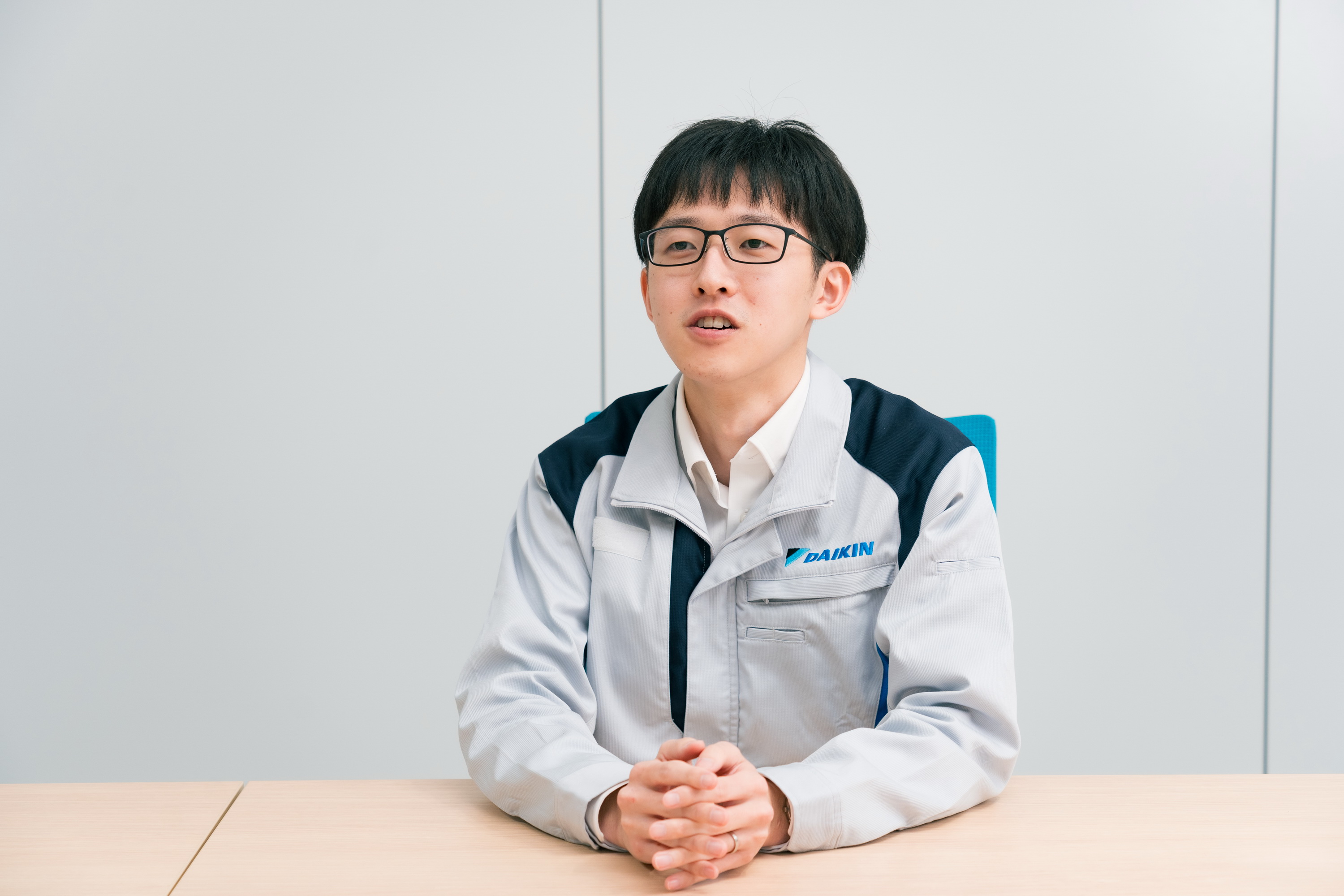
Matsui: After joining the company, I spent two years at the Daikin Information and Communications Technology College (DICT) where I learned a wide range of programming skills, including AI and IoT. The skills that I gained there have also been useful in designing digital circuits using hardware programming languages in semiconductor development.
Having been trained at DICT as a skilled digital human resource, I'm always conscious of the role that I am expected to play in the company and what I need to accomplish. Even in actual semiconductor design work, thinking about how to utilize digital technology is an essential part of the job.
Matsui: After joining the company, I spent two years at the Daikin Information and Communications Technology College (DICT) where I learned a wide range of programming skills, including AI and IoT. The skills that I gained there have also been useful in designing digital circuits using hardware programming languages in semiconductor development.
Having been trained at DICT as a skilled digital human resource, I'm always conscious of the role that I am expected to play in the company and what I need to accomplish. Even in actual semiconductor design work, thinking about how to utilize digital technology is an essential part of the job.
Having been trained at DICT as a skilled digital human resource, I'm always conscious of the role that I am expected to play in the company and what I need to accomplish. Even in actual semiconductor design work, thinking about how to utilize digital technology is an essential part of the job.
Matsui: When developing custom semiconductors, you must remember that you are working together with the manufacturers in technology development, rather than simply entrusting everything to them. For example, in the design process for the functional block that controls the inverter within the semiconductor, we finalize the specifications with the manufacturer while considering the functions required for motor control.
However, Daikin's unique air conditioner control contains confidential information, so there are times when it is not possible to make everything public. Even under those limitations, we have to accurately communicate the necessary functions and reflect them in the design specifications. Proactive proposals and clear information sharing engender smooth collaboration.
However, Daikin's unique air conditioner control contains confidential information, so there are times when it is not possible to make everything public. Even under those limitations, we have to accurately communicate the necessary functions and reflect them in the design specifications. Proactive proposals and clear information sharing engender smooth collaboration.
——Interactions with semiconductor-related companies at the Tokyo Lab
Matsui: Moving our base to the Tokyo lab has dramatically increased our interactions with semiconductor-related companies. A major accomplishment has been the ability to strengthen our collaborations not only with semiconductor manufacturers, but also with companies that provide the tools and design assets necessary for semiconductor design.
Because many semiconductor-related companies are concentrated in the Kanto region, we are reaping the benefits of being located in Tokyo. What's more, the opportunities to publicize information to the outside world have increased, making it easier to promote "Daikin's semiconductor development" and "student exchange initiatives." By utilizing the Tokyo Lab, Daikin has been able to further expand its contacts both inside and outside the industry, and this has also created to many positive outcomes in terms of R&D and recruiting human talent.
Matsui: Moving our base to the Tokyo lab has dramatically increased our interactions with semiconductor-related companies. A major accomplishment has been the ability to strengthen our collaborations not only with semiconductor manufacturers, but also with companies that provide the tools and design assets necessary for semiconductor design.
Because many semiconductor-related companies are concentrated in the Kanto region, we are reaping the benefits of being located in Tokyo. What's more, the opportunities to publicize information to the outside world have increased, making it easier to promote "Daikin's semiconductor development" and "student exchange initiatives." By utilizing the Tokyo Lab, Daikin has been able to further expand its contacts both inside and outside the industry, and this has also created to many positive outcomes in terms of R&D and recruiting human talent.
Technological Development Initiatives at the Tokyo Lab
——Long-sought semiconductor evaluation realized at the Tokyo lab
Horinouchi: Before being assigned to the Tokyo Lab, I was in charge of evaluating electromagnetic compatibility (EMC), namely the internal and external noise of air conditioners at TIC in Osaka. There I was involved in the operation and management of evaluation facilities and testing for four years. Currently at the Tokyo Lab, I am in charge of evaluating semiconductors and building the evaluation environment, which had been a long-time dream of mine.
From the time Daikin decided that it would begin semiconductor development, I've fiercely wanted to create in-house EMC standards for semiconductors, and my assignment to the Tokyo Lab made this possible.
——Fun and satisfaction in building an environment from zero
Horinouchi: At TIC in Osaka, air conditioner evaluations were performed according to the existing evaluation flow, but at the Tokyo Lab, we are creating new semiconductor evaluation methods and equipment from zero. For example, we devised the evaluation methods ourselves, such as how to set up the oscilloscope and create applications for automatic measurements.
——Custom semiconductors bring differentiation and prevent imitation
Horinouchi: Before being assigned to the Tokyo Lab, I was in charge of evaluating electromagnetic compatibility (EMC), namely the internal and external noise of air conditioners at TIC in Osaka. There I was involved in the operation and management of evaluation facilities and testing for four years. Currently at the Tokyo Lab, I am in charge of evaluating semiconductors and building the evaluation environment, which had been a long-time dream of mine.
From the time Daikin decided that it would begin semiconductor development, I've fiercely wanted to create in-house EMC standards for semiconductors, and my assignment to the Tokyo Lab made this possible.
——Fun and satisfaction in building an environment from zero
Horinouchi: At TIC in Osaka, air conditioner evaluations were performed according to the existing evaluation flow, but at the Tokyo Lab, we are creating new semiconductor evaluation methods and equipment from zero. For example, we devised the evaluation methods ourselves, such as how to set up the oscilloscope and create applications for automatic measurements.
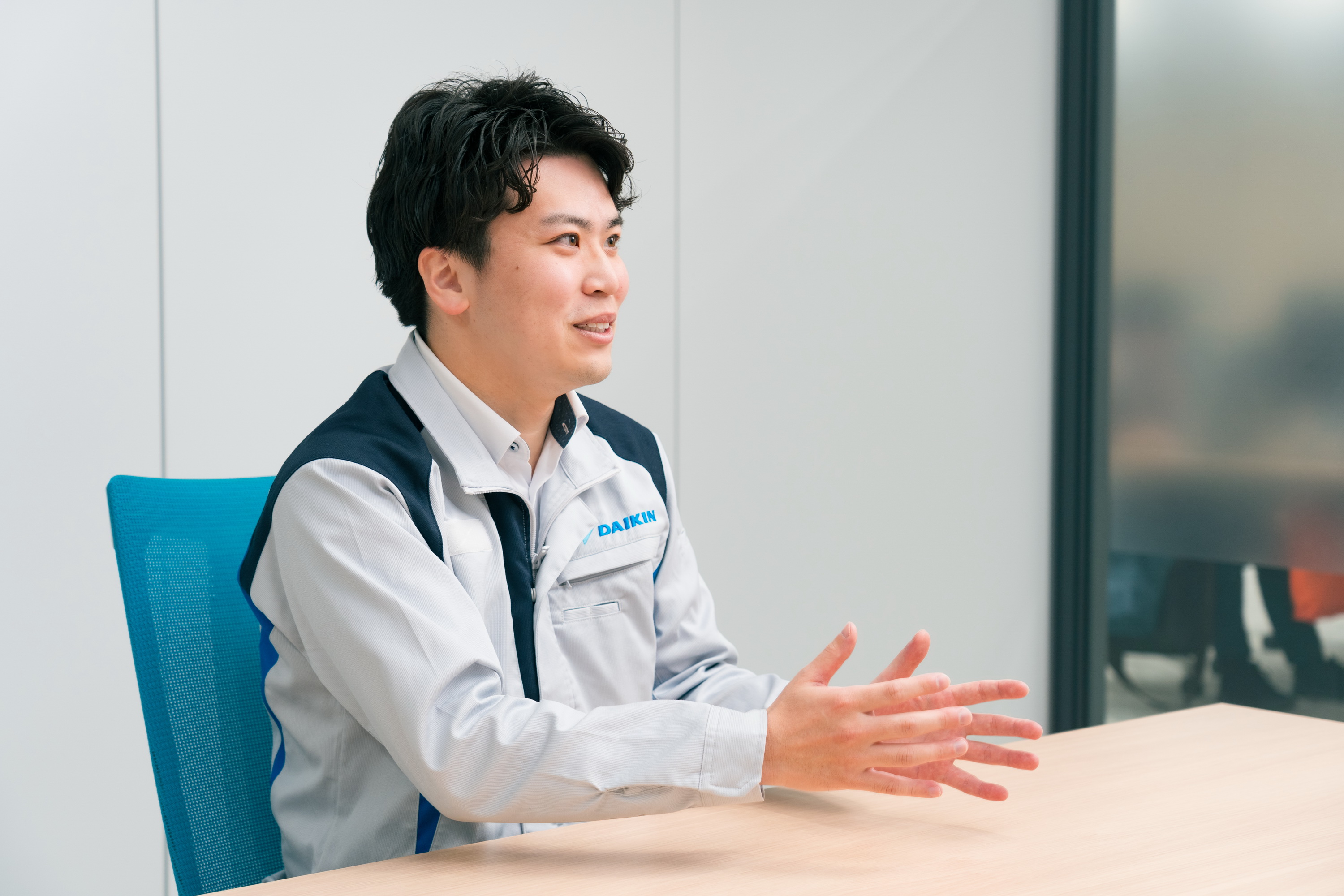
In the department to where I was assigned when I first joined the company, the EMC evaluation environment was already in place, so although there had been some improvements, the procedures and equipment were roughly decided.
However, at the Tokyo lab, we could start from zero and install equipment that was easy for us to use, and develop applications, so I find the job very worthwhile. Launching the semiconductor evaluation technology was difficult, but because we were starting from zero, we felt an unbelievable sense of satisfaction when it was completed.
In the department to where I was assigned when I first joined the company, the EMC evaluation environment was already in place, so although there had been some improvements, the procedures and equipment were roughly decided.
However, at the Tokyo lab, we could start from zero and install equipment that was easy for us to use, and develop applications, so I find the job very worthwhile. Launching the semiconductor evaluation technology was difficult, but because we were starting from zero, we felt an unbelievable sense of satisfaction when it was completed.
——Establishing evaluation technology and addressing problems as we look to the future
Horinouchi: When establishing evaluation technology, we always consider the operational ease and the safety of workers. In particular, it is essential to create an environment in which work can proceed smoothly and have a mindset to always take the utmost care to prevent accidents. Also, the semiconductors being evaluated today will be incorporated into products and released on the market in a few years.
For those rare occurrences when a problem does occur, we will be able to analyze and determine the cause. That makes it important for us to consider beforehand the analysis methods, countermeasures, and investigation procedures that need to be in place at that time, five to ten years from now, and gather and record the necessary information.
Horinouchi: When establishing evaluation technology, we always consider the operational ease and the safety of workers. In particular, it is essential to create an environment in which work can proceed smoothly and have a mindset to always take the utmost care to prevent accidents. Also, the semiconductors being evaluated today will be incorporated into products and released on the market in a few years.
For those rare occurrences when a problem does occur, we will be able to analyze and determine the cause. That makes it important for us to consider beforehand the analysis methods, countermeasures, and investigation procedures that need to be in place at that time, five to ten years from now, and gather and record the necessary information.
Horinouchi: Developing custom semiconductors that incorporate functions that cannot be attained with general-purpose products provides us with clear differentiation from other companies. Although the introduction of custom semiconductors into air conditioners is not yet common, they are already being used in automobiles and industrial machinery.
In developing our own semiconductors, we hope to gain a deeper understanding of their internal structure and operation, so that we are able to discuss these things on an equal footing with semiconductor manufacturers.
Future Outlook for Technological Development at the Tokyo Lab
——Expanding our area to promote integrated development of inverters, motors, and compressors
Iwata: In the future, we will expand the development area of the Tokyo Lab and install new compressor evaluation equipment to accelerate technological development. One of Daikin's advantages is the ability to simultaneously develop in-house the inverter, motor, and compressor, which are the main components of air conditioners.
Through in-house development, we can optimize the overall efficiency of energy conversion and achieve high product appeal. Furthermore, the three bases in the Kanto region (Daikin-UTokyo Lab, Tokyo Office, and the TIC Tokyo Lab) will strengthen cooperation through theme-sharing and progress meetings.
Iwata: In the future, we will expand the development area of the Tokyo Lab and install new compressor evaluation equipment to accelerate technological development. One of Daikin's advantages is the ability to simultaneously develop in-house the inverter, motor, and compressor, which are the main components of air conditioners.
Through in-house development, we can optimize the overall efficiency of energy conversion and achieve high product appeal. Furthermore, the three bases in the Kanto region (Daikin-UTokyo Lab, Tokyo Office, and the TIC Tokyo Lab) will strengthen cooperation through theme-sharing and progress meetings.
——Carbon neutrality and contribution to well-being
Matsui: Custom semiconductor development is an initiative that leads to carbon neutrality by enhancing inverter performance to save energy, miniaturizing equipment, and reducing material costs.
Iwata: Amidst predictions that electricity demand will triple by 2050, many air conditioners in operation around the world are still not yet equipped with inverters. In light of this, there is a strong demand for the widespread use of highly efficient inverter-equipped air conditioners.
Horinouchi: Tokyo is home to many universities and companies, providing ample opportunities for information exchanges and collaborations. We would like to utilize this network to work on improving energy efficiency by adopting better materials and aiming for further miniaturization.
The Ideal Engineer That Daikin Is Seeking
——Welcoming engineers who are unafraid of challenges
Matsui: Speaking of myself, I enjoy taking on new challenges and have a strong interest in new technologies and domains in which I completely lack experience. I believe that people with that kind of adventurous spirit will find a good fit with the spirit at Daikin, not just in semiconductor development.
Horinouchi: I used to work in a field that had nothing to do with semiconductor evaluations, but now I'm taking on evaluations based on my knowledge of electrical engineering. I'd like to see people who have the ability to complete tasks join our company, even if our field seems outside their area of expertise. I think having a willingness to meet any challenge is important.
——Looking for a partner who can lead a challenging development project to success
Matsui: Not only is Daikin working on semiconductor development, but it is also confronting various other challenging themes. Regardless of experience, we'd like anyone looking to take on new challenges to please come and join us.
Iwata: Unlike automobiles, customers can't simply pop the hood of an air conditioner and see the technologies for themselves, but air conditioners utilize highly advanced technologies, such as motors that rotate at 8,000 times per minute. Moreover, because people use air conditioners all over the world in a wide range of industrial fields, these products also present their own unique technical challenges. This makes our company the perfect environment for those who want to develop their skills as engineers. Let's work together to achieve carbon neutrality and well-being.
Matsui: Speaking of myself, I enjoy taking on new challenges and have a strong interest in new technologies and domains in which I completely lack experience. I believe that people with that kind of adventurous spirit will find a good fit with the spirit at Daikin, not just in semiconductor development.
Horinouchi: I used to work in a field that had nothing to do with semiconductor evaluations, but now I'm taking on evaluations based on my knowledge of electrical engineering. I'd like to see people who have the ability to complete tasks join our company, even if our field seems outside their area of expertise. I think having a willingness to meet any challenge is important.
——Looking for a partner who can lead a challenging development project to success
Matsui: Not only is Daikin working on semiconductor development, but it is also confronting various other challenging themes. Regardless of experience, we'd like anyone looking to take on new challenges to please come and join us.
Iwata: Unlike automobiles, customers can't simply pop the hood of an air conditioner and see the technologies for themselves, but air conditioners utilize highly advanced technologies, such as motors that rotate at 8,000 times per minute. Moreover, because people use air conditioners all over the world in a wide range of industrial fields, these products also present their own unique technical challenges. This makes our company the perfect environment for those who want to develop their skills as engineers. Let's work together to achieve carbon neutrality and well-being.
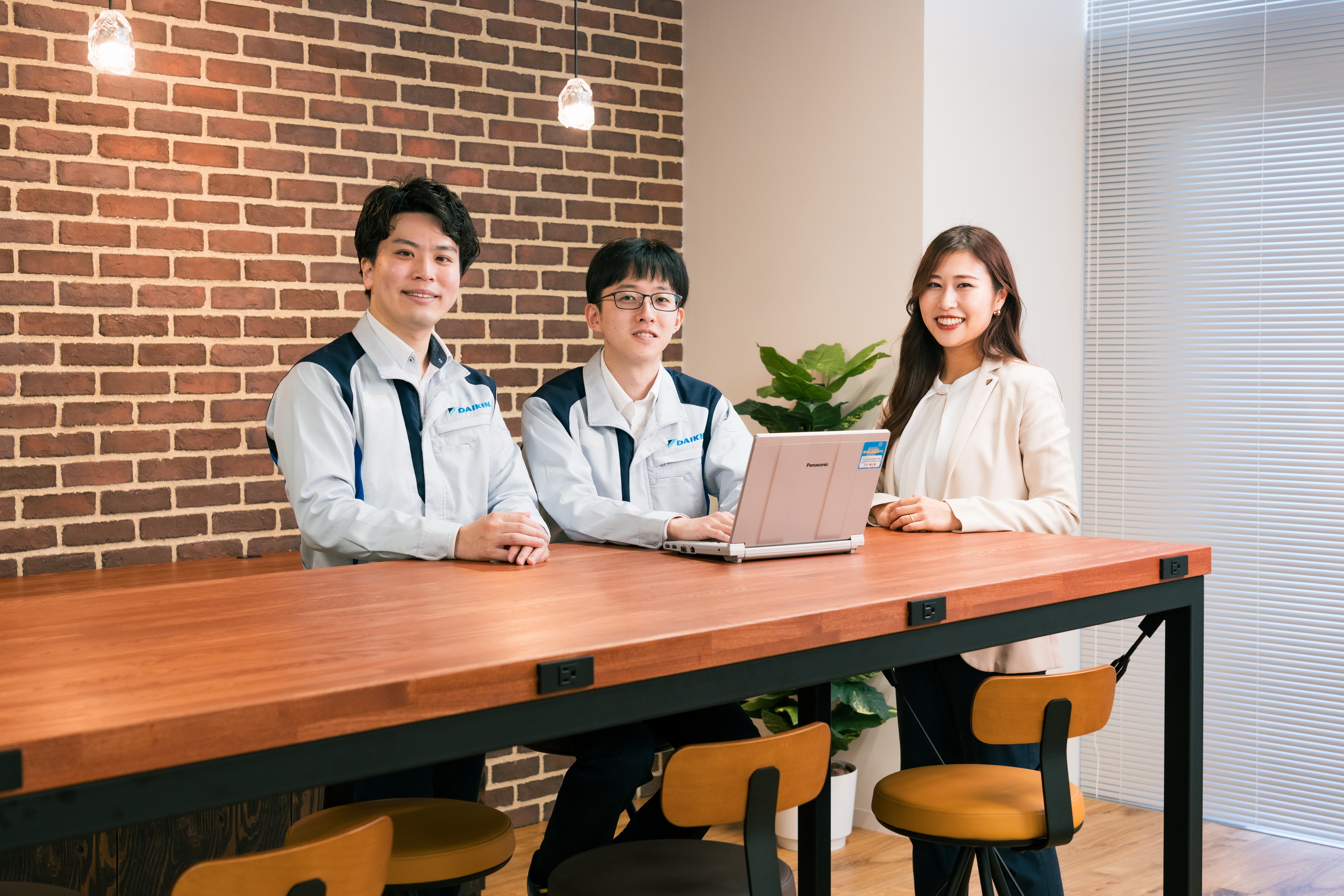
Horinouchi: As a manufacturer specializing in air conditioning, Daikin's strength lies in its ability to develop semiconductors that are customized for air conditioning.
We also have a culture where all members work together to see even challenging projects through to completion. We would like to see as many people as possible lend their support to the development of future semiconductors that will create new functions and technologies.
Horinouchi: As a manufacturer specializing in air conditioning, Daikin's strength lies in its ability to develop semiconductors that are customized for air conditioning.
We also have a culture where all members work together to see even challenging projects through to completion. We would like to see as many people as possible lend their support to the development of future semiconductors that will create new functions and technologies.
We also have a culture where all members work together to see even challenging projects through to completion. We would like to see as many people as possible lend their support to the development of future semiconductors that will create new functions and technologies.

Aya Iwata
Technology and Innovation Center
Joined in April 2017. Originally from Gifu Prefecture.
Responsible for R&D strategy planning and operations in the Kanto region.
"I want to pursue and realize the type of R&D that will enable company to continue to succeed globally, not just from a technical perspective, but also from a strategic and comprehensive perspective."
Technology and Innovation Center
Joined in April 2017. Originally from Gifu Prefecture.
Responsible for R&D strategy planning and operations in the Kanto region.
"I want to pursue and realize the type of R&D that will enable company to continue to succeed globally, not just from a technical perspective, but also from a strategic and comprehensive perspective."

Yuya Horinouchi
Technology and Innovation Center
Joined in April 2019. Originally from Kagoshima Prefecture.
Responsible for developing evaluation technology for custom semiconductors.
"I hope to establish Daikin's unique semiconductor evaluation technology and contribute to the future air conditioning business."
Technology and Innovation Center
Joined in April 2019. Originally from Kagoshima Prefecture.
Responsible for developing evaluation technology for custom semiconductors.
"I hope to establish Daikin's unique semiconductor evaluation technology and contribute to the future air conditioning business."

Akito Matsui
Technology and Innovation Center
Joined in April 2022. Originally from Fukui Prefecture.
Responsible for custom semiconductor development, digital circuit design, and evaluation technology.
Technology and Innovation Center
Joined in April 2022. Originally from Fukui Prefecture.
Responsible for custom semiconductor development, digital circuit design, and evaluation technology.
"I want to refine my cross-disciplinary design skills, regardless of software or hardware, to meet the needs of the world."
Related article


